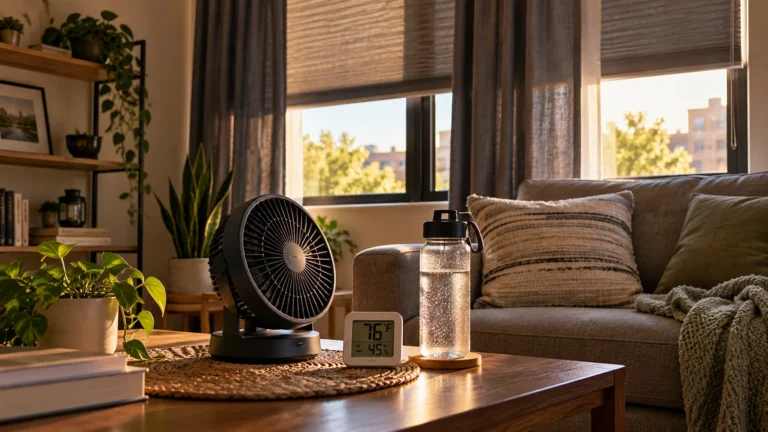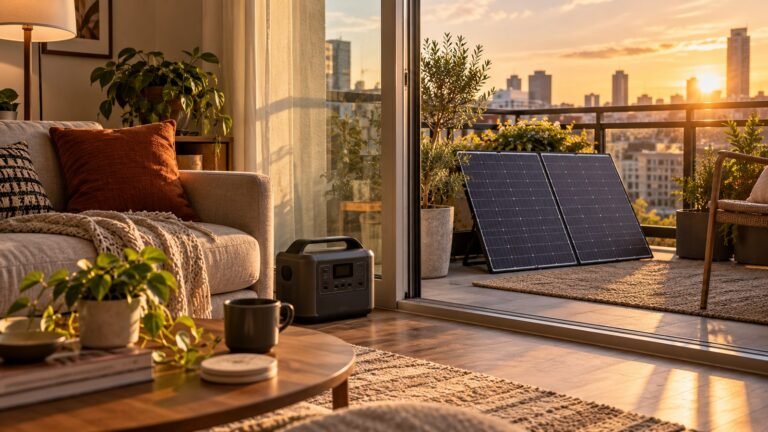
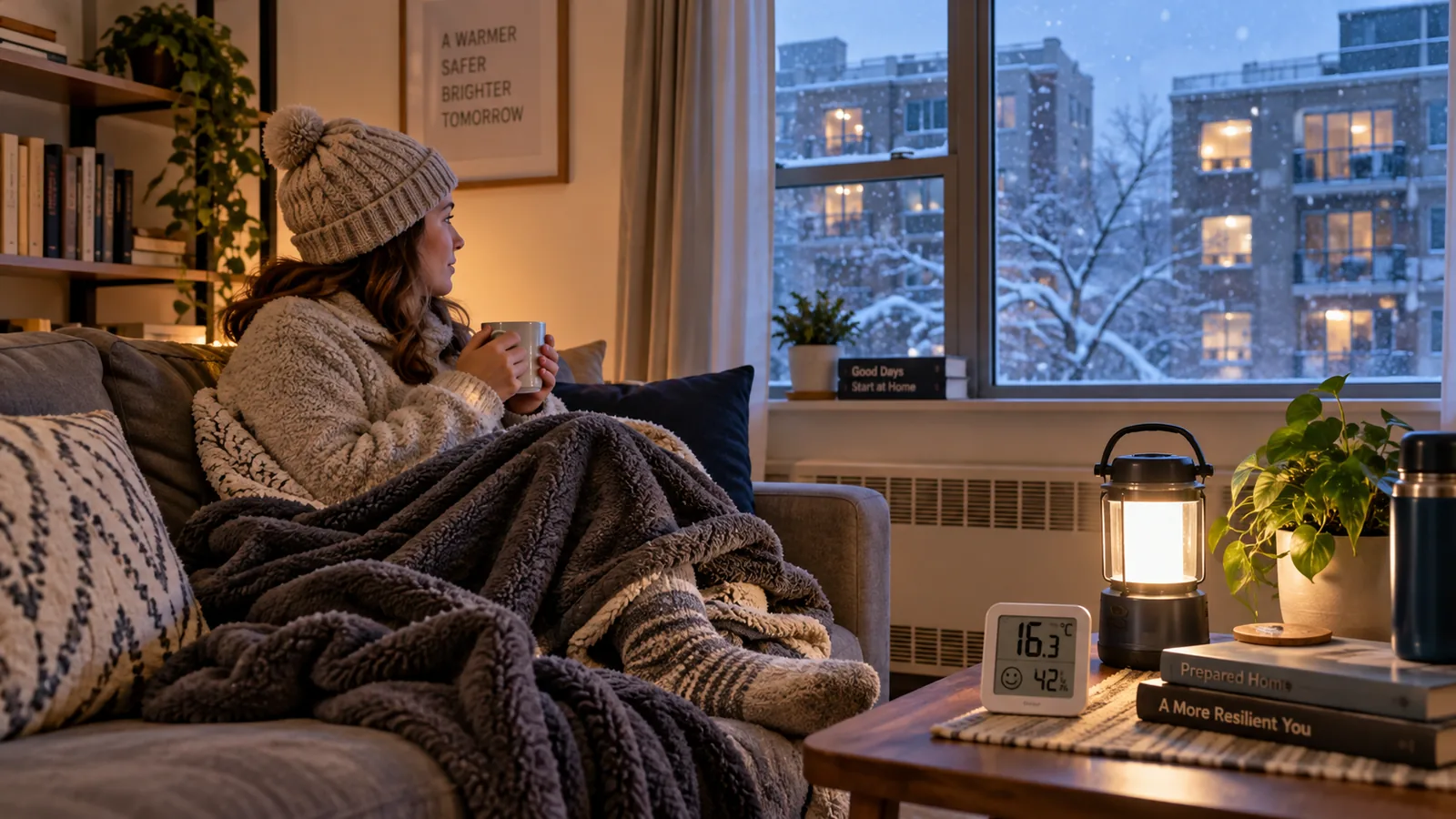
When a winter storm causes an apartment power outage, your home can gradually become colder as heat escapes. Unlike single-family homeowners who might start a dual-fuel outdoor generator or light a wood-burning fireplace, renters and condo residents face space constraints and strict building rules regarding heating equipment. Renters generally cannot make electrical-panel modifications without required permission and approvals, operate gas-powered generators on balconies, or use fuel-burning heating or cooking equipment indoors.
The core strategy for how to keep warm without power during an extended blackout in a rental property is shifting your focus from trying to heat an entire unit to keeping yourself warm and preserving heat in a designated warm area. By focusing on body heat retention, sealing draft points, setting up a microclimate, and using only safe, non-combustion equipment, these steps can slow heat loss and help you stay warmer while you monitor conditions and plan to relocate if needed.
Immediate Winter Outage Action Plan
- Check Outage Scope & Notify Management: Check your utility’s outage map on your phone. If the heating failure is building-wide or isolated to your boiler/heat pump, notify property management immediately.
- Prevent Hazards When Power Returns: Turn off stovetops and ovens. Unplug portable space heaters and other unattended heat-producing appliances so they cannot restart unexpectedly when electricity is restored.
- Preserve Indoor Warmth: Close window blinds, shades, and thermal drapes—except where direct sunshine provides daytime solar warmth. Shut doors to unused rooms—except where unheated bathrooms or kitchens contain vulnerable plumbing. Block drafty door thresholds with rolled towels.
- Insulate People First: Layer up with moisture-wicking base layers, insulating mid-layers, hats (for adults and older children), and warm socks.
- Create a Warm Room: Gather your household in a smaller interior room away from cold exterior walls and drafty windows.
- Monitor Conditions & Assess Risk: Use a digital thermometer to track indoor temperatures. Arrange alternative heated accommodation early if conditions deteriorate or occupants are vulnerable.
⚠️ Important Medical & Life-Safety Notice
If anyone in your household relies on electrically powered medical equipment (such as oxygen concentrators or medical pumps), prepare a device-specific outage plan in advance with their healthcare team and equipment supplier. Verify approved backup-power options, expected runtime, and whether uninterrupted power is required. Keep emergency communications available, and arrange an alternative location or urgent assistance if essential equipment cannot be supported safely. Never substitute generic consumer battery runtime estimates for professional medical backup planning.
1. What to Do Immediately When the Heat Stops
If your apartment’s heat shuts off during freezing weather, your primary goal is to slow heat loss while your apartment is still warm. Apartment buildings can retain some warmth after heating stops, but windows, air leaks, and drafts can allow heat to escape if unmanaged.
Assess the Outage Scope
Before making major adjustments, determine whether the loss of heat is a building-wide issue or a grid outage:
- Check your utility’s outage map: Verify whether your neighborhood grid is down.
- Look at neighboring buildings and hallway lights: Check if emergency lighting is active in common hallways.
- Notify property management: If grid power is on but your central boiler, hydronic loop, or building heat pump has failed, report it right away. Early reporting helps maintenance crews respond before pipes freeze.
- Prevent hazards when power returns: Turn off stovetops and ovens. Unplug portable space heaters and other unattended heat-producing appliances so they cannot restart unexpectedly when electricity is restored.
Slow Down Heat Loss
Closing window coverings and reducing drafts helps slow cooling; the degree of benefit depends on building insulation and window quality:
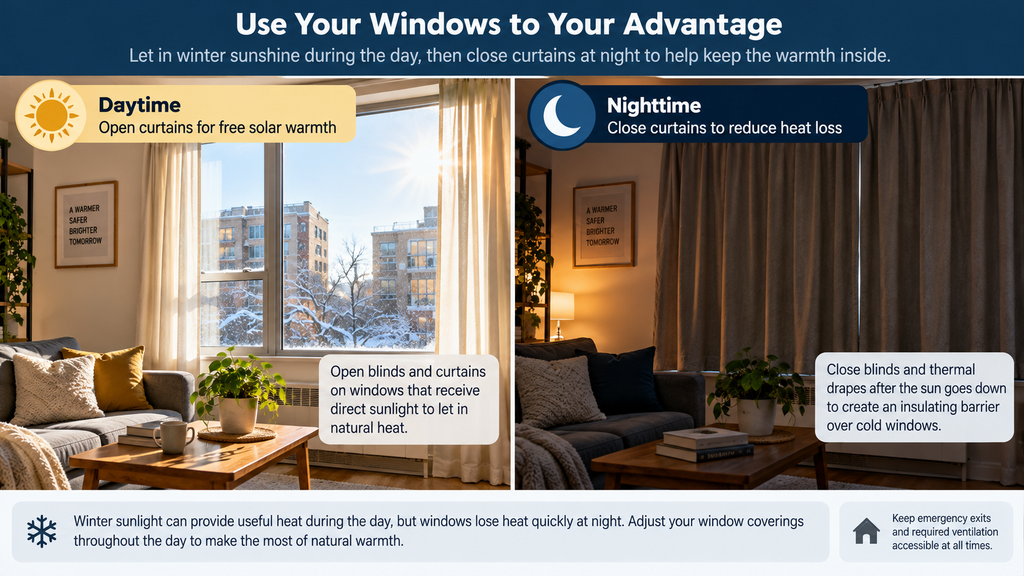
- Close window coverings: Pull down blinds and close heavy curtains to create an insulating barrier over cold glass panes.
- Isolate unused rooms safely: Shut the doors to spare bedrooms and walk-in closets to avoid wasting trapped heat on unoccupied spaces. Crucial exception: Keep interior doors open if shutting off an unheated bathroom or kitchen risks exposing vulnerable plumbing pipes to freezing temperatures.
- Block door drafts: Place draft stoppers or tightly rolled towels along the bottom of exterior doors and cold hallway entrances. Ensure draft stoppers do not block primary fire escape routes, fire-rated doors, or prevent doors from latching properly.
2. How to Stay Warm Without Electricity
When central heating fails, effective heating without electricity focuses on warming the person rather than attempting to heat all the air around you. Your body continuously generates metabolic heat; proper personal insulation traps that warmth right next to your skin.
The Three-Layer Clothing Strategy
Layering clothing traps insulating pockets of warm air between garments:
- Base Layer (Moisture Control): Wear synthetic thermal underwear or merino wool against your skin. Avoid cotton as a base layer during active movement—cotton absorbs perspiration, holds moisture against the skin, and accelerates body heat loss when damp.
- Mid-Layer (Insulation): Wear fleece jackets, wool sweaters, or insulated hoodies to trap body heat.
- Outer Layer (Protection): Wear a wind-resistant jacket or heavy coat to prevent air currents from stripping away trapped warmth.
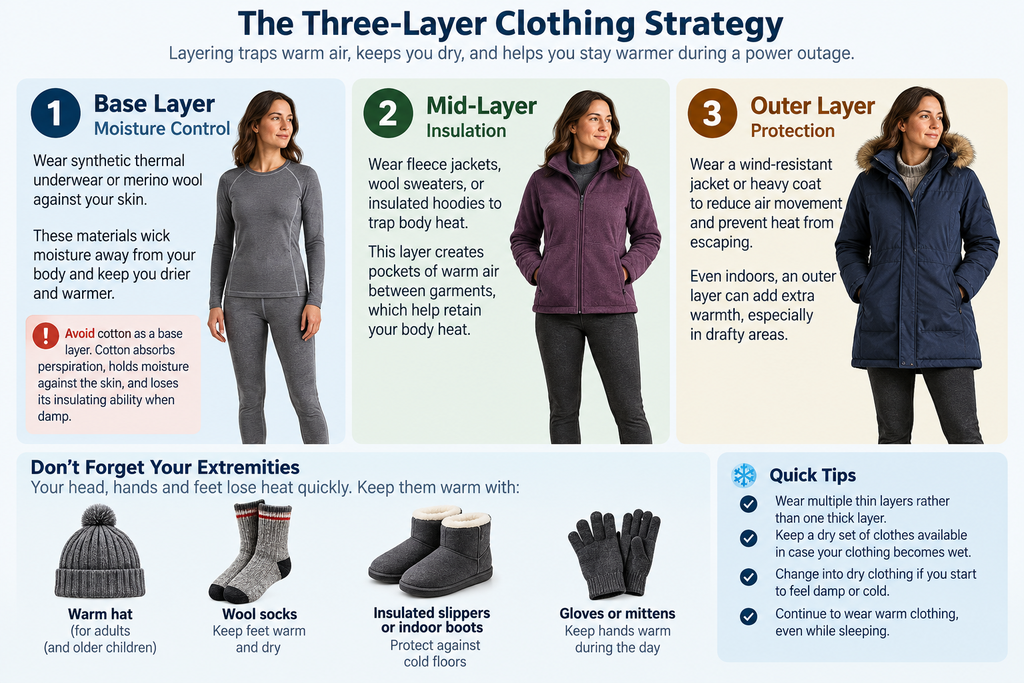
Keeping Head, Feet, and Extremities Warm
- Thermal socks and footwear: Wear thick wool or thermal socks with insulated slippers or indoor boots. Cold floors can quickly make bare feet feel colder.
- Hats and beanies (for adults and older children): Wearing a knit hat or beanie indoors helps reduce heat loss and improves overall comfort.
- ⚠️ Infant Sleep Safety & Guidelines: Health Canada’s safe-sleep guidance warns that infants must never wear hats indoors while sleeping due to overheating and Sudden Infant Death Syndrome (SIDS) risks. Dress infants in temperature-appropriate, properly fitted sleepwear or sleep sacks. Note: Sleepwear is not a substitute for adequate room warmth; if indoor temperatures are falling, infants require early access to a safely heated environment.
- Safe infant sleeping: Do not put infants to sleep inside makeshift blanket forts or on a shared adult sleeping surface. Use a separate crib, cradle, or bassinet with a firm, flat mattress, place the baby on their back, and follow standard safe-sleep guidance.
Bedding, Blankets, and Hot-Water Bottles
- Layering blankets: Pile heavy comforters, fleece blankets, and wool throws on beds. Beds provide excellent insulation off cold floors.
- Safe hot-water bottle use: Hot-water bottles are an effective, passive way to warm bedding, if safely heated water is available (do not attempt to improvise an unvented indoor stove to heat water). According to safety precautions published by the Australian Competition & Consumer Commission (ACCC) Product Safety Australia:
- Use water at manufacturer-recommended temperatures—never boiling water: Filling hot-water bottles with boiling water damages rubber seams, degrades materials, and causes severe scald burns if the bottle leaks or bursts.
- Always use a fabric cover: Never place a hot-water bottle directly against bare skin. Exercise extreme caution with young children, elderly adults, or anyone with reduced temperature sensitivity, and do not lie or sit directly on top of a filled hot-water bottle. Check your specific product’s labeling and jurisdiction-specific replacement guidelines.
- Remove from bed before sleeping: Always remove the hot-water bottle from the bed before going to sleep to prevent prolonged direct contact, accidental pressure leaks, or severe scald burns during sleep.
- Avoid improvised glass containers: Do not use glass canning jars or rigid plastic bottles as makeshift bed warmers, as they can crack or leak under pressure.
Supervised Personal Electric Heating
- AC Heating Pads vs. USB Products: A standard AC heating pad requires an AC power station or inverter and cannot be powered by a standard USB phone bank. Low-voltage USB heated pads or wraps require compatible USB power outputs matching their manufacturer specifications.
- Clinical Health Warnings vs. Manufacturer Instructions: Clinical health guidance from HealthLink BC explicitly warns individuals with chronic numbness, diabetes, or impaired temperature sensation against applying direct heat to skin without medical supervision. For general users, safety rules (such as permitted surface contact, sleep restrictions, and auto-shutoff features) depend on exact manufacturer model instructions—never sleep with standard heating pads or tuck them tightly inside sleeping bags without explicit product approval.
3. How to Keep Your Apartment Warmer for Longer
If you are looking for how to heat a room without electricity, the most effective approach is conserving ambient heat in a single living area to reduce the rate at which interior temperatures drop.
Maximize Passive Solar Heating
In the Northern Hemisphere, open window drapes on windows receiving direct, bright sunshine during peak daylight hours to allow solar radiation to warm interior surfaces. As soon as solar gain ends or on overcast days, keep window coverings drawn tightly to seal in trapped heat.
Seal Drafts Safely
- Temporary window insulation: As a temporary measure, apply removable clear window insulating film according to product instructions per US Department of Energy window insulation guidance. Bubble wrap sprayed lightly with water can serve as an optional improvised alternative, though its thermal performance varies.
- Keep emergency exits clear: Never tape over or obstruct primary exit doors, windows designated as emergency escapes, or fire doors. Do not block mechanical ventilation grilles, fire alarms, or smoke/CO alarms.
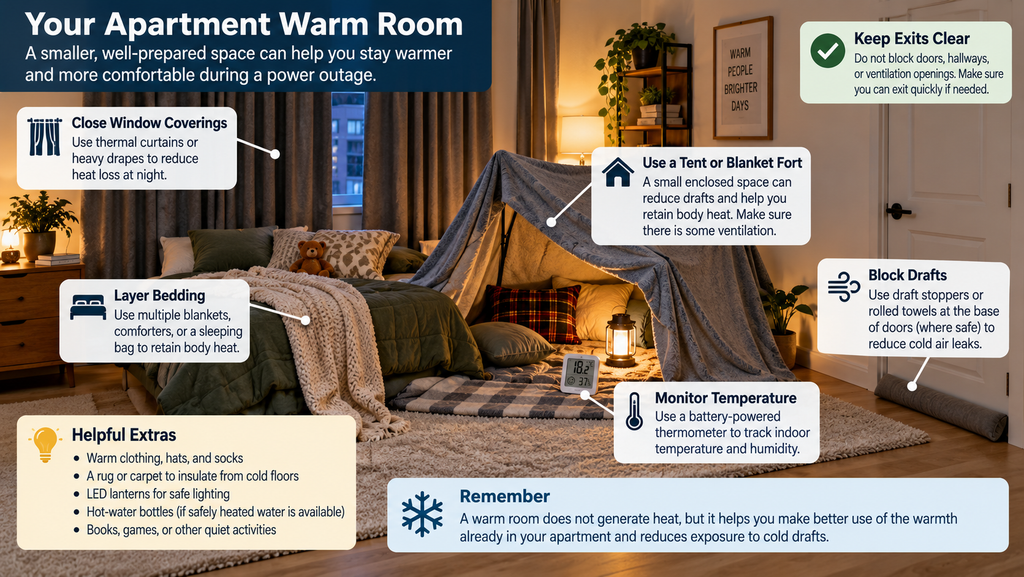
Select a Designated Warm Room
Gathering the household into a single interior room makes it easier to stay together, monitor one another, and reduce personal exposure to cold drafts:
- Choose a smaller room away from cold exterior walls and large drafty windows (such as an interior living room or bedroom).
- Prefer shutting an existing safe interior door to confine warmth. If hanging heavy blankets across openings, never block corridors, emergency exits, fire doors, or smoke/CO alarms. Remind household members that warm rooms and blanket forts do not generate heat and cannot be relied on indefinitely if room temperatures continue to fall.
Build an Indoor Microclimate (Blanket Forts or Tents)
If you are looking for the cheapest way to heat a room without electricity or conserve warmth on a budget, the most effective approach isn’t buying unapproved fuel heaters—it is creating a compact microclimate. Setting up a small camping tent or blanket fort over a bed or couch reduces drafty air movement around occupants and helps retain trapped body heat:
- Proper ventilation: Keep airflow vents open to prevent moisture accumulation.
- Zero combustion inside: Never bring candles, fuel heaters, or stoves inside a tent or enclosed blanket fort.
- Safe infant sleeping space: Keep infants in a separate crib, cradle, or bassinet free of loose blankets or soft items—never inside makeshift blanket forts or shared adult beds.
4. Can a Portable Power Station Help Keep You Warm?
Many renters purchase portable battery power stations hoping to run standard electric space heaters during blackouts. To evaluate whether a power station can operate a heater, you must check two distinct technical specifications: continuous AC inverter power rating (Watts) and stored energy capacity (Watt-hours). A capacity label alone (e.g., 500 Wh) does not specify continuous AC inverter output.
Portable Battery vs. Electric Space Heater Checklist
Step 1: Check Continuous Inverter Watts (W)
- Standard Electric Space Heater Demand: 1,500 Watts (W)
- Hypothetical Power Station Inverter Rating: 500 W Continuous AC Output
- Assessment: The 1,500 W heater demand exceeds the station’s 500 W continuous AC rating. The station cannot run this 1,500 W heater setting.
Step 2: Hypothetical Runtime Model (If Inverter Supports 1,500 W Load)
- Nominal Battery Capacity: 500 Watt-hours (Wh)
- Assumed Delivered Usable AC Energy (80% Fraction): 500 Wh × 0.80 = 400 Wh
- Worked Calculation: 400 Wh ÷ 1,500 W = 0.267 hours (~16 minutes)
- Assessment: Even if a 500 Wh battery station includes a high-wattage 1,500 W AC inverter, an assumed 400 Wh delivered usable AC energy output yields only ~16 minutes of continuous operation.
Conclusion: Compact portable power stations (such as this hypothetical 500 Wh / 1,500 W scenario) are impractical for running whole-room electric space heaters. Reserve battery power for low-wattage essential loads instead.
| Equipment / Parameter | Specification / Planning Value |
|---|---|
| Standard Electric Space Heater Draw | 1,500 Watts (W) |
| Example Compact Portable Power Station | 500 Watt-hours (Wh) nominal capacity |
| Assumed Usable Energy at AC Outlet (80% Efficiency, Illustrative) | 500 Wh × 0.80 = 400 Wh (planning model) |
| Continuous Inverter Constraint Example | If inverter is rated below 1,500 W (e.g., 500 W), unit cannot support the 1,500 W heater load. |
| Hypothetical Runtime (if inverter output supports 1,500 W) | 400 Wh ÷ 1,500 W = 0.267 hours (~16 minutes) |
Note: This calculation is a hypothetical planning model where 80% represents the assumed delivered usable AC energy fraction (400 Wh delivered at the outlet from a 500 Wh nominal battery). Inverter conversion and efficiency losses are included in this 400 Wh usable energy figure and should not be subtracted a second time. Actual runtime varies depending on battery chemistry, ambient temperature, idle power draw, and heater settings. For detailed battery load formulas, see our companion guide on How Much Backup Power Does an Apartment Actually Need?.
Practical Uses for Portable Power Stations
Instead of attempting whole-room electric space heating with compact battery units, portable power stations are better suited for running low-wattage, high-priority devices:
- Smartphones & emergency communication: Keeps communication active during blackouts.
- LED emergency lighting: Delivers safe, flame-free low-power lighting. For detailed lighting layouts, see How to Light an Apartment Safely During a Power Outage.
- Internet routers & ONTs: Maintains Wi-Fi if local ISP infrastructure remains powered.
- Low-voltage USB heating pads or blankets: Provides targeted personal warmth following device safety instructions.
5. Safe Indoor Heating Without Electricity & Methods to Avoid
When researching alternative heat sources without electricity, renters often look for indoor heaters that don’t require electricity or gas. However, attempting to heat an apartment with unapproved fuel equipment or makeshift devices creates severe risks of carbon monoxide (CO) poisoning, fire, and toxic gas accumulation.
Fuel-Burning Space Heaters in Apartments
Products like portable propane heaters (e.g., Mr. Heater Big Buddy), kerosene heaters, or canned liquid heat (e.g., Sterno) present major safety hazards in tight apartment spaces:
- Building & Municipal Guidance: Municipal safety guidance, building rules, and local regulations frequently restrict fuel-burning space heaters in apartments. For example, the City of Toronto’s heating safety guidance explicitly advises residents not to heat their homes with propane or fuel-fired portable heaters during power outages.
- Carbon Monoxide & Oxygen Depletion: Fuel-burning devices consume oxygen and can produce dangerous carbon monoxide gas, especially if combustion or ventilation is inadequate.
- The “Window Crack” Misconception: Opening a window slightly does not guarantee safe ventilation or eliminate CO risks. Ventilation needs depend on the appliance and operating conditions; cracking a window is not a universal safety fix.
Distinguishing Installed Building Systems from Unsafe Improvised Combustion
It is vital to distinguish between unsafe improvised heating and professionally installed building systems:
- Building Central Systems & Approved Fireplaces: Professionally installed, building-approved heating systems (such as central hydronic heating loops or certified, exterior-vented gas fireplaces) operate under strict building code and ventilation standards.
- Prohibited Improvised Heating: Unvented portable fuel heaters, camping stoves, charcoal grills, and outdoor appliances lack exterior flue venting and must never be operated inside an apartment.
Dangerous Makeshift Heating Practices
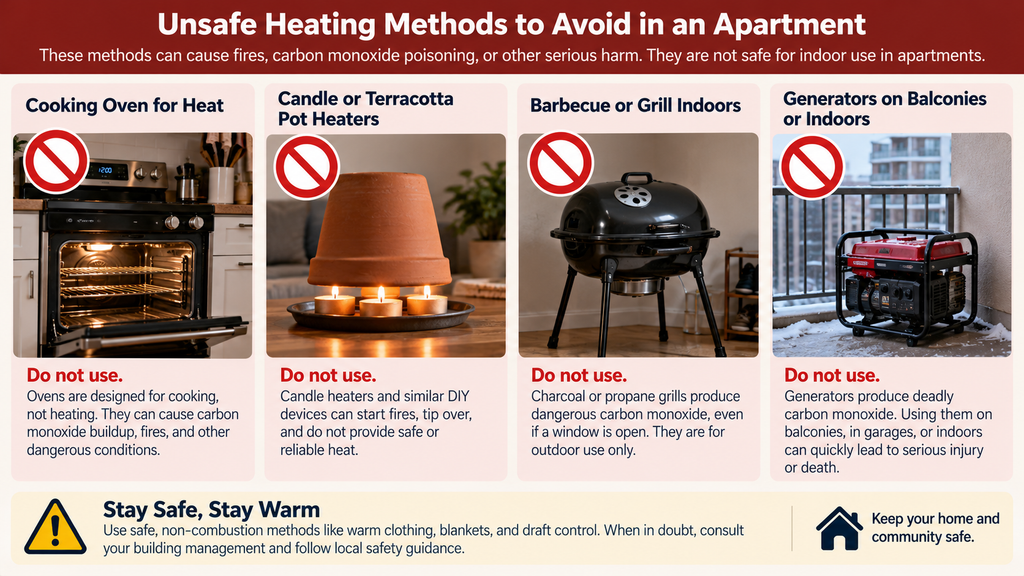
- Ovens and gas ranges: Never use a gas or electric oven to heat your home. Using a gas oven to heat a room can create dangerous carbon monoxide exposure, and open electric elements pose extreme fire hazards.
- Terracotta pot candle heaters: Terra cotta pots placed over tea-light candles do not generate net new heat. A candle produces a small, fixed thermal output regardless of whether a clay pot rests above it. Clay pot setups trap heat, create dangerous hot wax pools, and increase fire hazards in compact rooms.
- Outdoor generators & balcony heaters: Outdoor generators, barbecue grills, or unvented diesel heaters must never be operated indoors or on apartment balconies. Exhaust fumes easily drift into apartments through window gaps and building air intakes.
Carbon Monoxide & Smoke Alarm Safety
- Certified CO & Smoke Alarms: Use alarms approved or certified for your jurisdiction. In Canada, look for a recognized Canadian certification mark on the unit, such as CSA, cUL, ULC, or cETL. In the US, choose alarms listed or certified by a recognized testing laboratory to applicable standards, such as UL 2034 for carbon monoxide alarms and UL 217 for smoke alarms.
- Proper Installation & Maintenance: Verify that certified smoke and carbon monoxide alarms are properly installed in required locations and maintained according to City of Toronto CO alarm standards and Health Canada fire safety guidance. Test alarms regularly and replace expired units.
- Emergency Action: If a CO alarm sounds or anyone experiences headaches, dizziness, nausea, or confusion, evacuate the apartment immediately using a safe, usable route if possible, close doors behind you, call emergency services from outside, and do not re-enter until cleared by firefighters. If evacuation cannot safely be completed (due to mobility constraints, disability, or a blocked exit route), call emergency services immediately, state your exact floor and apartment unit number, explain your mobility or exit constraints, and follow dispatch instructions.
6. When to Leave Your Apartment: A Risk-Based Decision Guide
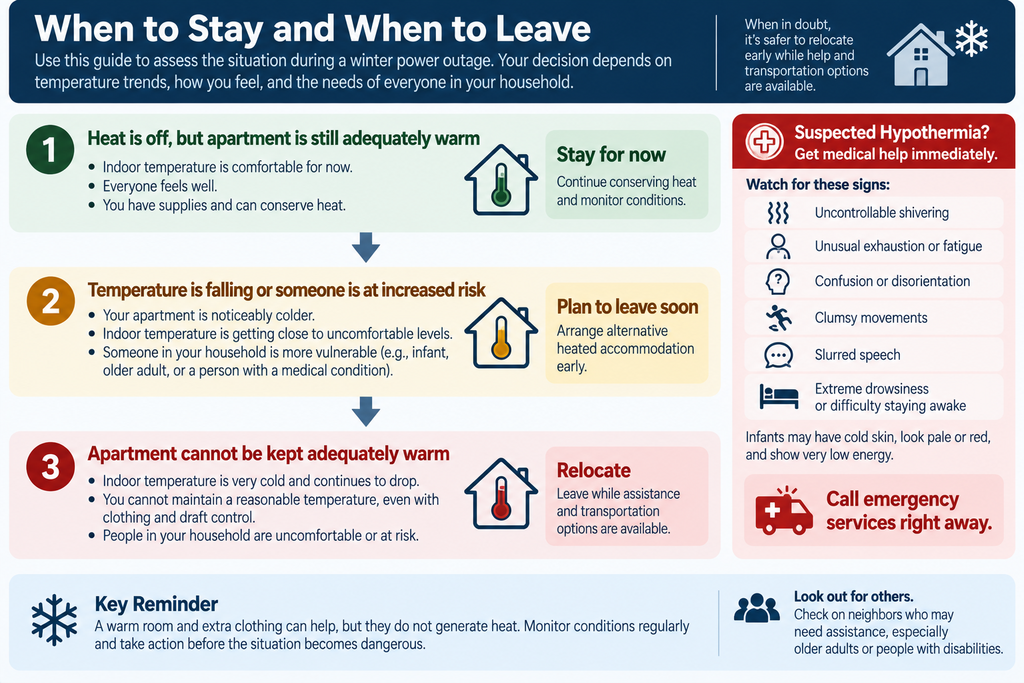
Deciding when to stay in your apartment and when to relocate requires evaluating indoor conditions, occupant health, drop rates, and forecast outage duration.
Context on Cold Exposure: The US National Institute on Aging warns that indoor temperatures of 60–65°F (16–18°C) can lead to hypothermia in older adults. Infants and people with certain medical conditions may also be more vulnerable to cold, but no single indoor temperature threshold determines safety for every household. Use this decision framework to guide your actions:
| Household Situation | Recommended Action | Escalation & Verification |
|---|---|---|
| 1. Heat lost, but indoor conditions remain adequate | Conserve heat, monitor temperatures with a room thermometer, contact property management, and track utility repair forecasts. | Verify building boiler status and utility ETR (estimated time of restoration). |
| 2. Temperature falling or conditions unsuitable for occupants | Arrange safe alternative heated accommodation early (family, friends, or hotel). Seek help immediately if mobility, age, or health makes delayed travel risky. | Confirm destination heating and transportation route safety before departure. |
| 3. Apartment cannot be kept adequately warm | Relocate to a municipal warming center, community shelter, or heated home while transportation and assistance are accessible. | Contact local municipal information lines (e.g., 311) for open shelter locations. |
| 4. Suspected hypothermia or cold illness | Call emergency medical services (911 / EMS) immediately. Do not treat a warming center as a substitute for urgent medical care. | Follow emergency dispatcher instructions; keep person wrapped in dry blankets. |
Recognize the Signs of Hypothermia
Watch for shivering, unusual exhaustion, confusion, clumsy movements, slurred speech, or extreme drowsiness per CDC guidance on recognizing hypothermia. Infants may have unusually cold skin and very low energy. If you suspect hypothermia, call emergency services immediately. Do not wait for a particular room temperature or attempt to manage the situation only with blankets.
Apartment & Building Resilience Planning
- Never assume elevators will operate: Elevator availability varies during blackouts; while some high-rise buildings maintain backup generator power for one elevator, many do not. For detailed building service impacts, see Building Services Power Outage.
- Accessible Evacuation Planning: If you cannot use stairs, ask building management how assisted evacuation will work when elevators are unavailable, who to contact, and what arrangements are in place for a prolonged outage. Do not assume that access to a stairwell is an evacuation solution.
- Check building emergency procedures: Contact property management before or early in an outage to ask about heating repair timelines, common-area backup power, and assistance for residents with mobility needs. For first-day action workflows, refer to our Apartment Emergency Outage Kit guide.
7. What to Prepare Before Winter
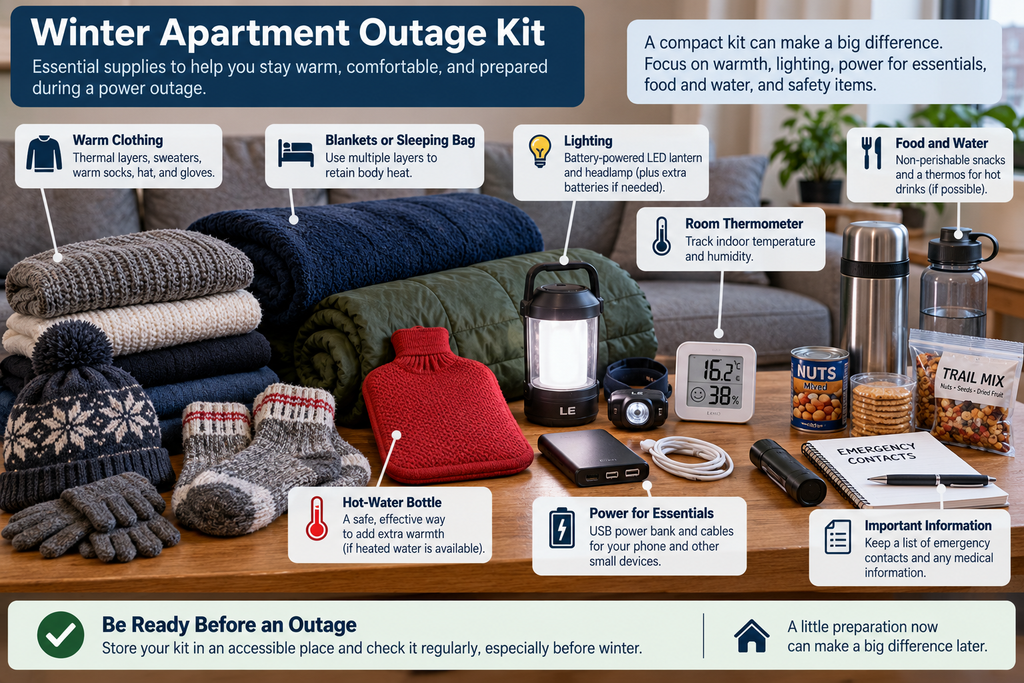
Building a winter apartment outage kit ahead of time allows you to respond calmly during severe weather.
Winter Apartment Outage Kit Checklist
- Indoor Digital Thermometer: A battery-powered room thermometer to track indoor temperatures accurately.
- Thermal clothing & layers: Merino wool or synthetic base layers, fleece mid-layers, heavy wool socks, and knit beanies (for adults).
- Quality bedding: High-loft blankets, comforters, or cold-rated sleeping bags.
- Purpose-made hot-water bottles: With soft fabric covers for safe bedding warmth.
- Lighting & Power: LED headlamps, lanterns, and portable USB power banks.
- Food & warm liquids: Shelf-stable, high-calorie foods, instant soups, and insulated thermoses.
- Safety equipment: Verify that certified smoke and carbon monoxide alarms are properly installed in required locations and operational, with working batteries or battery backup as required per Health Canada fire safety guidance. Keep an appropriate Class ABC fire extinguisher accessible, and know how to use it.
Protecting Apartment Plumbing
Extreme indoor cold threatens water pipes:
- Allow ambient air to reach pipes: Open cabinet doors under kitchen and bathroom sinks so ambient room air can circulate around plumbing.
- Follow management guidance on dripping faucets: If instructed by property management during severe freezes, let faucets trickle slightly to keep water moving through vulnerable pipes.
Related Backup-Power & Outage Guides
Explore our complementary guides across the portfolio to build complete household resilience:
- Apartment Emergency Outage Kit: Non-perishable food planning, water storage, and first 24-hour emergency supply checklists.
- Safe Emergency Lighting Options: Selecting LED lanterns, headlamps, and battery lighting for power blackouts.
- Building Services Power Outage: Elevators, water pressure, central boilers, and high-rise building infrastructure.
- Battery Capacity Limitations & Sizing: Detailed watt-hour formulas, inverter limits, and setup guides for home power stations.
Key Takeaway & Next Step
Staying warm in an apartment without power is about insulating people and small spaces, not operating unapproved fuel space heaters. Today, test your carbon monoxide and smoke alarms, place a battery-powered room thermometer in your emergency kit, and check your window coverings for drafts before winter weather arrives.